If you have ever followed a generic 16-week marathon plan, you will know the feeling. Week three, the plan says 18km on Sunday. You had four hours sleep, a stressful week at work, and your legs feel like concrete. But the plan says 18km. So you run 18km.
That is not training smart. That is just following instructions.
The problem with generic plans
Generic training plans are built for a fictional runner. One who wakes up every day feeling fresh, sleeps eight hours a night, has no job stress, no social life, no illness, and no other sport or physical activity outside of running.
That runner does not exist.
Real runners play five-a-side on Tuesday nights. They go to weddings. They have bad weeks at work. They get colds. They stay up too late. And all of those things affect how their body responds to training stress, whether the plan acknowledges it or not.
The result is predictable. Runners who follow rigid plans without adjusting for real life end up in one of two places: injured, or burnt out. Often both.
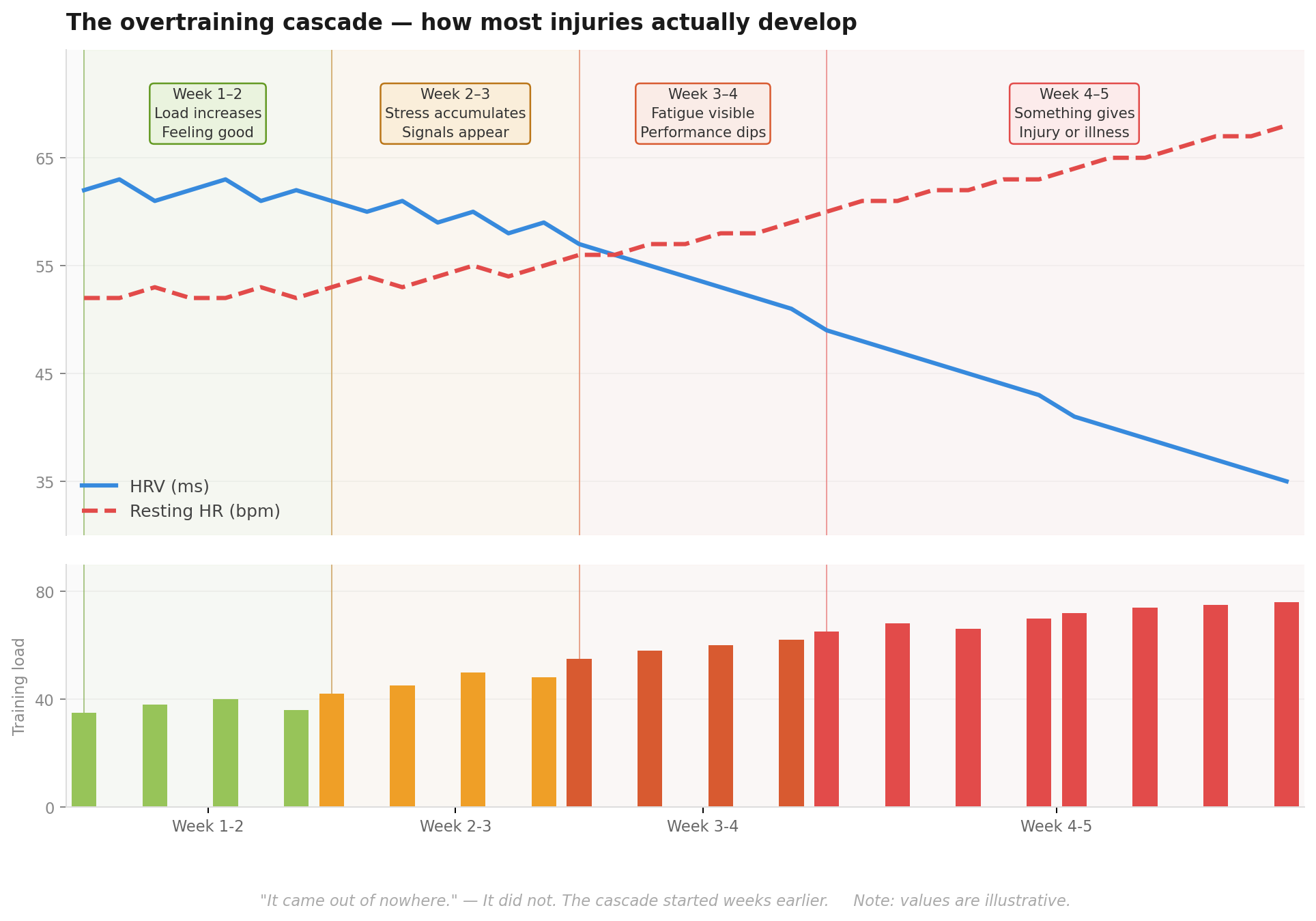
Research consistently shows that the majority of running injuries are not caused by a single bad session. They are caused by accumulated load over time, doing too much too soon without adequate recovery. A plan that does not adapt cannot prevent this. It can only ignore it.
What a real coach actually does
Elite runners do not follow generic plans. They have coaches. And what a good coach does is fundamentally different from what a printed plan does.
A coach watches you. They ask how you slept. They notice when your form is off. They adjust the session on the day based on how you are actually moving and feeling. They know that the Tuesday tempo run needs to become an easy jog because you played golf yesterday and your HRV is low this morning.
A coach does not just prescribe training. They read signals, make judgements, and adapt in real time.
For most runners, that level of support has always been out of reach. A good running coach costs hundreds of pounds a month. Most people have never had one and never will.
That is where AI changes things.
What AI coaching actually means
AI coaching is not a chatbot that tells you to stretch more. Done properly, it is a system that reads the same signals a good human coach would read and makes the same kinds of adaptive decisions.
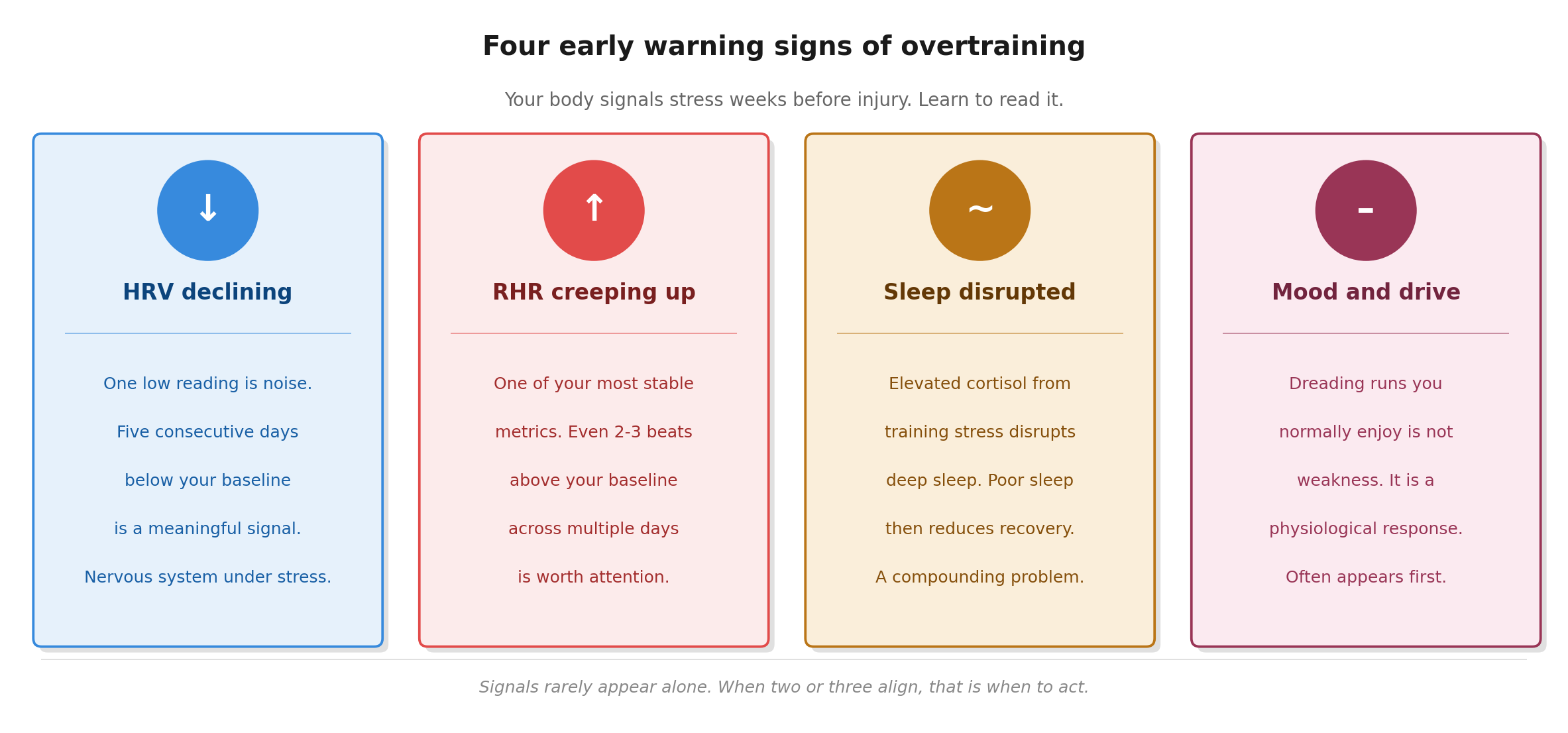
Your HRV tells it how recovered your nervous system is. Your resting heart rate tells it whether your body is under stress. Your sleep data tells it whether you have had the recovery you need. Your training load over the past 28 days tells it whether you are building fitness safely or accumulating injury risk. Your running cadence and ground contact time tell it whether your form is breaking down.
Put all of that together and you have something a printed plan can never give you: a training decision based on who you actually are today, not who the plan assumes you to be.
The daily check-in
One thing AI can do that a plan cannot is ask you how you feel. Not in a vague wellness app way, but in a specific structured way that feeds directly into the training decision.
Energy levels. Soreness. Motivation. Mood. Pain. These subjective signals matter. Research on overtraining consistently shows that mood and motivation changes are often the earliest indicators of accumulated fatigue, appearing before significant physiological markers show up in data.
A system that combines objective health data with how you actually feel on a given morning is far more powerful than either alone.
Adaptive training in practice
Here is what this looks like on a normal training week.
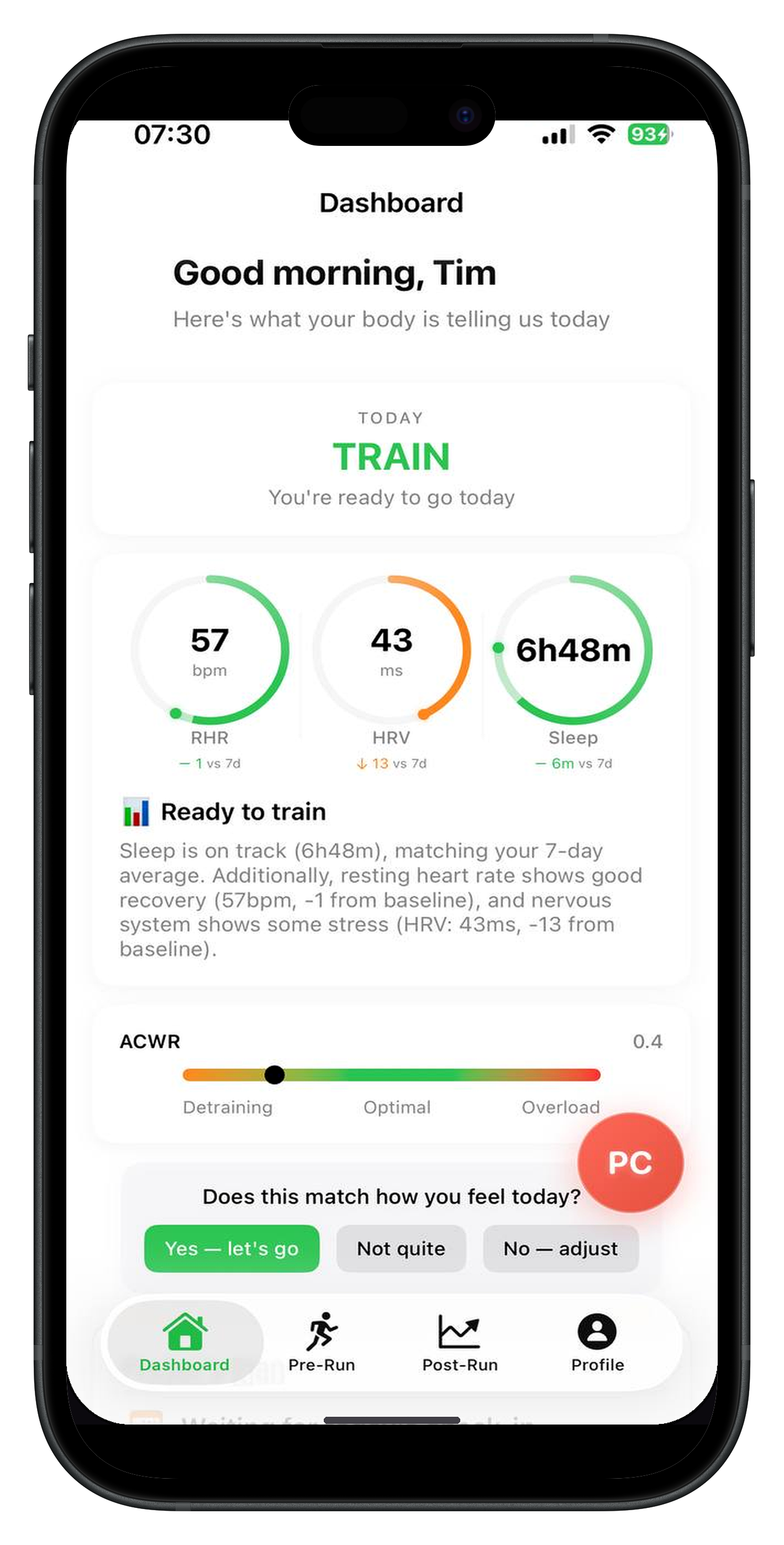
Monday you ran 12km easy. Tuesday your HRV is slightly down and you report low energy. The system flags a RECOVER day, not because you are broken, but because your body is telling you it needs time before the next training stimulus. You do a 20 minute walk instead.
Wednesday your HRV has bounced back. Resting heart rate is at your normal baseline. You feel good. The system says TRAIN. You do your planned tempo session.
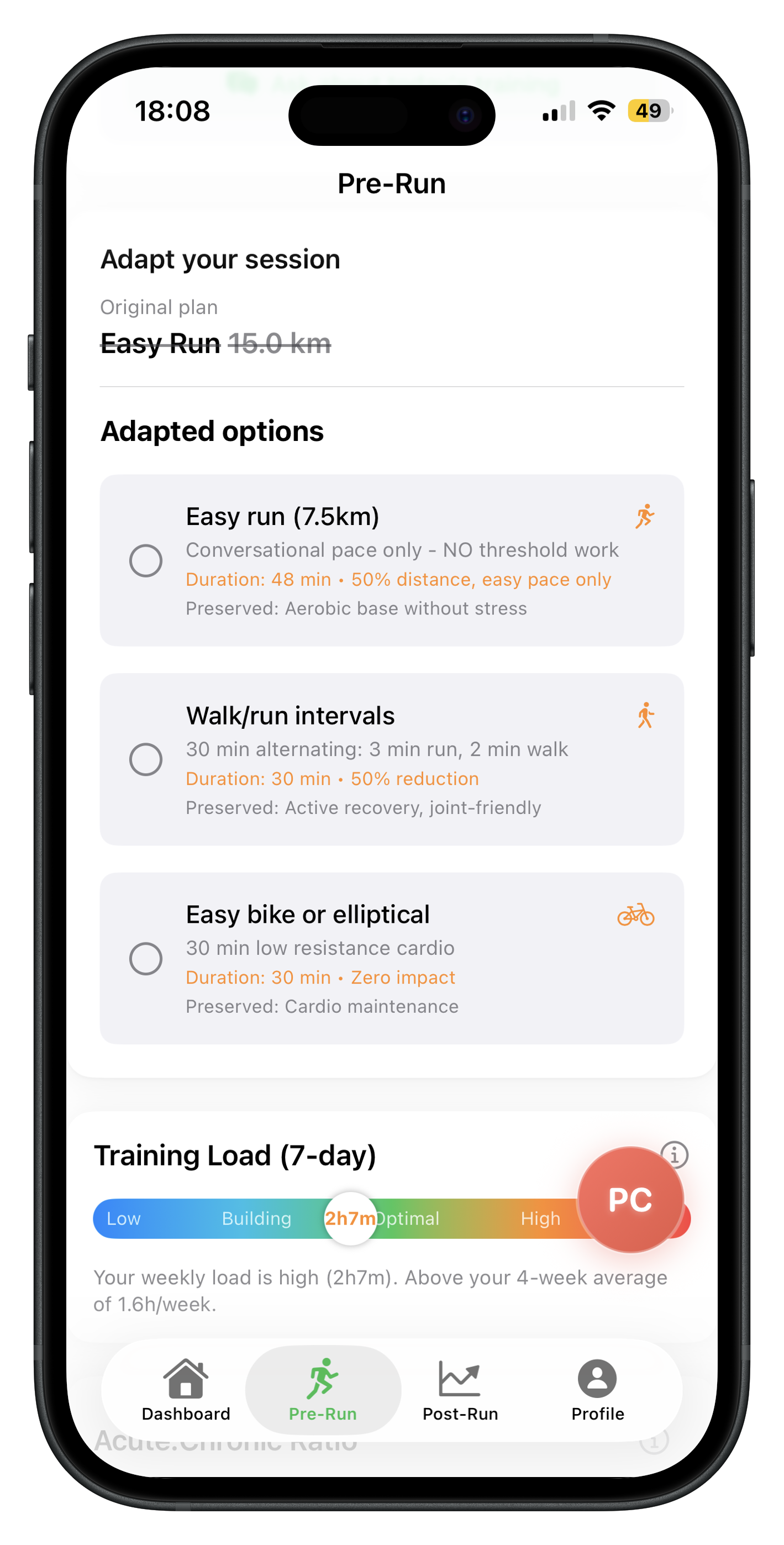
Friday you have a work event the night before. Poor sleep. The system sees the sleep data and your check-in confirms low energy. It suggests ADAPT, a shorter easier version of your planned run that keeps your fitness ticking over without digging a recovery hole you will spend the weekend climbing out of.
That is adaptive training. Not rigid. Not random. Intelligent.
Accessible coaching for every runner
The democratisation of coaching is the real story here. Ten years ago if you wanted adaptive personalised running guidance you needed to hire a coach. Most people could not afford that, and most people never got it.
AI changes the economics completely. The same principles that elite coaches use, monitoring HRV, managing training load, adjusting sessions based on recovery status, are now available to anyone with an Apple Watch and an iPhone.
You do not need to be an elite athlete to train like one. You just need a system that treats you like an individual rather than a template.
What this means for your running
The runners who stay healthy and improve consistently are not the ones who follow their plan most rigidly. They are the ones who know when to push and when to back off. They treat recovery as part of training, not a failure of commitment.
AI coaching does not replace hard work. It makes sure the hard work you do actually lands, that your body is in a state to absorb it, adapt to it, and come back stronger.
That is the difference between a training plan and a training system.